
The Ultimate Guide to CrossFit Gym Flooring: From Box Jumps to Barbell Drops
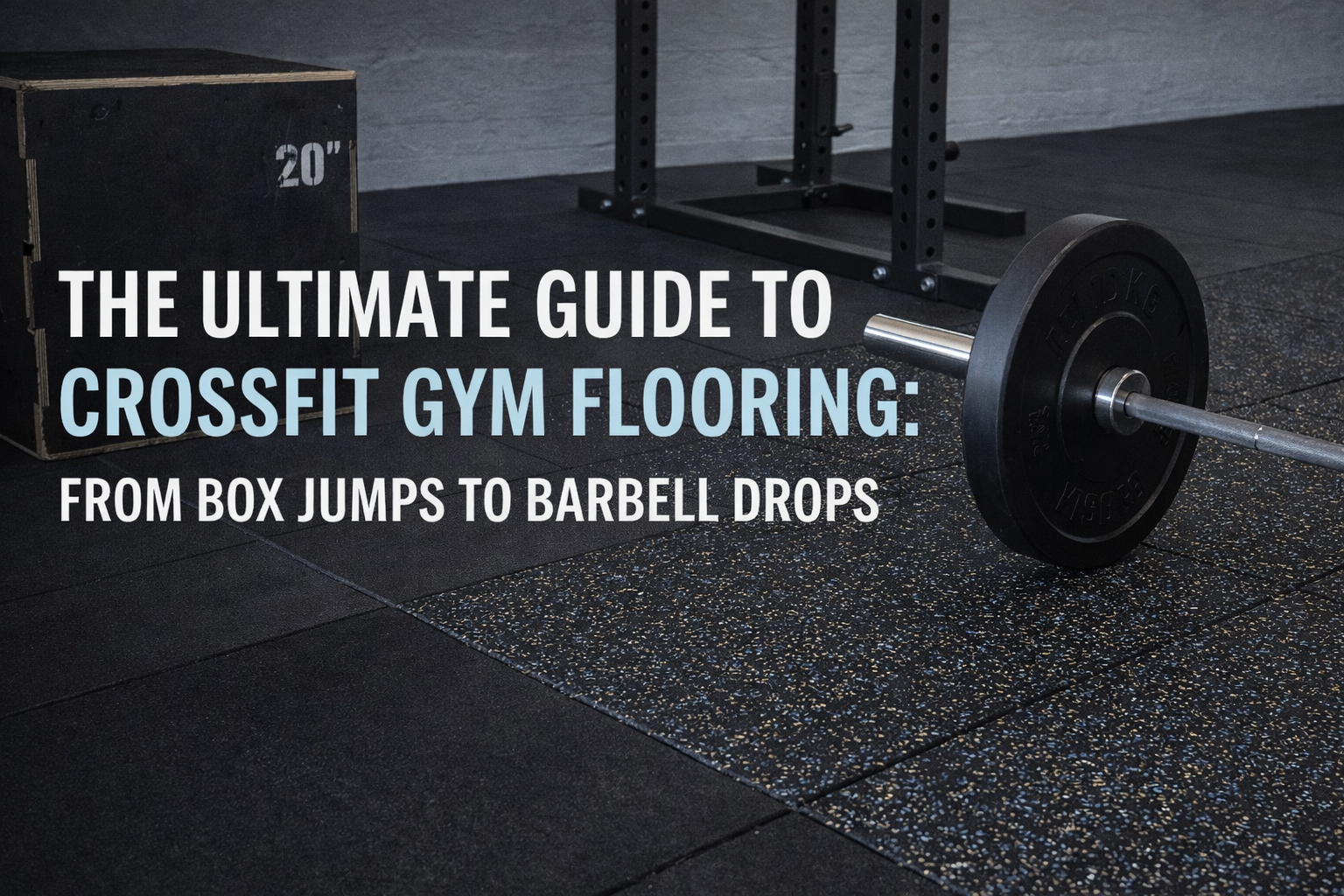
The Ultimate Guide to CrossFit Gym Flooring: From Box Jumps to Barbell Drops
Opening a CrossFit box or upgrading your functional training space? Your flooring isn't just a surface—it's a critical piece of equipment that protects your athletes, your investment, and your coaching reputation.
Unlike traditional gyms where members primarily use machines, CrossFit training creates unique flooring challenges: repeated barbell drops, explosive plyometrics, heavy sled pushes, and constant high-intensity movement across multiple training zones. The wrong flooring compromises safety, limits programming, and leads to expensive premature replacement.
This comprehensive guide gives CrossFit box owners and functional fitness facility operators everything you need to choose, install, and maintain flooring that handles the demands of constantly varied, high-intensity training.
Why CrossFit Flooring is Uniquely Demanding
CrossFit and functional training facilities face flooring challenges that differ significantly from traditional gyms or even powerlifting-focused spaces.
The Intensity Factor
Traditional commercial gyms experience steady, predictable stress patterns. Members use machines, perform controlled movements, and generally train at moderate intensities with rest periods.
CrossFit and HIIT training is fundamentally different:
Explosive, High-Impact Movements: Box jumps, burpees, double-unders, and plyometric work create repeated shock loads across large floor areas.
Frequent Barbell Drops: Olympic lifting variations (cleans, snatches, jerks) often conclude with controlled drops from overhead height. During WODs, athletes might perform 20-30+ drops in a single session.
Continuous Movement: Unlike strength training with rest periods, CrossFit sessions maintain intensity for 15-20+ minutes with minimal rest, creating sustained stress on flooring.
Multi-Directional Forces: Sled pushes, farmers carries, rope pulls, and dynamic movements generate lateral forces and friction that standard flooring isn't designed to handle.
Variable Body Weights and Loads: The same square meter might support a 60kg athlete doing air squats, then immediately handle a 100kg athlete dropping 140kg from overhead.
The Variety Challenge
Traditional gyms can optimize for specific activities. Powerlifting gyms focus on heavy static loads. Cardio centers prioritize cushioning for running.
CrossFit boxes must accommodate everything simultaneously:
- Olympic weightlifting platforms for barbell work
- Open floor space for bodyweight WODs and gymnastics
- Turf areas for sled pushes and sprint intervals
- Rowing stations requiring stable, protective surfaces
- Plyometric zones for box jumps and explosive movements
Your flooring system must handle this diversity without compromise.
Understanding CrossFit-Specific Flooring Zones
The most successful CrossFit boxes use zone-based flooring approaches that match surface characteristics to specific training demands.
Zone 1: Olympic Lifting and Barbell Areas
Primary Activities: Cleans, snatches, jerks, thrusters, deadlifts, any movements involving barbell drops
Key Requirements:
- Maximum impact absorption for dropped barbells (60-150kg from overhead)
- Noise reduction for neighboring spaces and athletes
- Protection of subfloor from repeated high-force impacts
- Surface that won't shift or separate under impact
- Durability for thousands of drops without degradation
Surface Characteristics Needed:
- Thickness: 20-25mm minimum for serious drop zones
- Density: High-density rubber that absorbs rather than bounces
- Construction: Multi-layer shock-absorbing systems preferred
- Coverage: Should extend beyond immediate lifting area to catch missed drops
Recommended Solutions:
Primary choice for drop zones: Pavigym Extreme S&S 22mm or Pavigym Endurance S&S 22mm
These shock and sound-absorbing tiles are engineered specifically for repeated impacts:
- Multi-layer construction with acoustic dampening
- 18-20 decibel noise reduction
- Virgin rubber for maximum durability
- Interlocking for stability without glue
- Designed to handle 1000+ drops without performance degradation
For boxes on ground floors with less noise concern: Pavigym Extreme 7mm offers excellent protection at reduced thickness.
Layout Considerations:
- Position lifting zones away from high-traffic areas
- Ensure minimum 2m x 2m per lifting platform
- Allow 30-40cm buffer zone around platforms
- Consider dedicated platforms with wooden inserts for competition-standard lifting
Zone 2: Open Floor / WOD Area
Primary Activities: Bodyweight movements, gymnastics, burpees, dumbbell work, kettlebell swings, light barbell movements without drops
Key Requirements:
- Cushioning for repeated jumping and landing
- Firm enough for stability during dynamic movements
- Comfortable for floor exercises (sit-ups, planks)
- Easy to clean (sweat resistance)
- Durable for constant foot traffic
Surface Characteristics Needed:
- Thickness: 7-10mm ideal balance of cushioning and stability
- Texture: Smooth but slip-resistant
- Firmness: Moderately firm—too soft compromises movement quality
- Appearance: Professional aesthetic for member experience
Recommended Solutions:
Primary choice: Pavigym Motion 9mm
Designed specifically for functional training and HIIT:
- Optimal cushioning without excessive softness
- Excellent grip for barefoot training and agility work
- Smooth surface comfortable for floor exercises
- Interlocking design for easy installation
- Available in multiple colors for zone definition
Alternative: Pavigym Extreme 7mm for boxes prioritizing durability and cost-effectiveness.
Layout Considerations:
- Allocate largest continuous floor space for WOD area
- Position centrally for visibility and coaching access
- Minimum 40-50m² for group classes of 10-12 athletes
- Clear sight lines to coaching position and whiteboard
Zone 3: Turf Area for Sled and Sprint Work
Primary Activities: Sled pushes/pulls, farmers carries, sprint intervals, tire flips, prowler work, agility drills
Key Requirements:
- Excellent grip for explosive pushing and pulling
- Durability under sled friction and heavy implements
- Comfortable footing for sprint work
- Aesthetic appeal (turf defines functional training spaces)
- Easy maintenance despite heavy use
Surface Characteristics Needed:
- Pile height: 11-22mm depending on sled type and usage intensity
- Backing: Heavy-duty for sled work without tearing
- Infill: Optional depending on application
- Width: Minimum 2m for sled lanes, wider for multi-use
Recommended Solutions:
For intensive sled work: Pavigym Turf Roll 11mm
- Purpose-engineered for sled pushing
- Excellent durability under friction
- Professional appearance
- Lower pile height reduces resistance
For multi-use functional zones: Pavigym Custom Turf 16mm or 22mm
- Higher pile provides cushioning for sprint work
- Available in multiple colors for branding
- Versatile for varied functional training
- Suitable for tire flips and dynamic movements
Layout Considerations:
- Turf lanes: 2m width minimum, 10-15m length ideal
- Position along walls or edges to maximize open floor space
- Consider dual-direction lanes for flow during group sessions
- Ensure adequate turning space at ends
Zone 4: Rowing and Cardio Equipment
Primary Activities: Rowing machines, assault bikes, ski ergs, any stationary cardio equipment
Key Requirements:
- Stability preventing equipment movement
- Protection from equipment feet and rails
- Noise reduction from equipment operation
- Easy cleaning for sweat management
- Comfortable standing surface for transitions
Surface Characteristics Needed:
- Thickness: 7-10mm adequate for equipment protection
- Density: Firm to prevent equipment rocking
- Moisture resistance: Essential given sweat generation
- Appearance: Clean, professional look
Recommended Solutions:
Pavigym Motion 9mm or Pavigym Performance+ 5mm
Both offer:
- Appropriate protection for equipment
- Smooth surface for easy cleaning
- Comfortable for transitions and standing
- Professional aesthetic
Layout Considerations:
- Position equipment in rows for efficient space use
- Allow 1.5m spacing between rower rails
- Consider noise when positioning near other zones
- Ensure adequate ventilation access
Zone 5: Accessory and Bodyweight Work
Primary Activities: Mobility work, stretching, core exercises, gymnastics skills practice, warm-up area
Key Requirements:
- Comfort for floor-based exercises
- Appropriate cushioning without excessive softness
- Easy to clean and maintain
- Defines dedicated space for auxiliary work
Surface Characteristics Needed:
- Similar to open floor WOD area
- Slightly softer acceptable given lower impact activities
- Clean, professional appearance
Recommended Solutions:
Pavigym Motion 9mm provides ideal characteristics for auxiliary work while matching primary WOD area aesthetics.
Layout Considerations:
- Position away from high-intensity zones to reduce distraction
- Natural light access preferred for stretching and mobility
- 15-20m² adequate for most boxes
- Can overlap with other low-intensity uses
Handling Repeated Barbell Drops: The Critical Factor
Barbell drops are the defining characteristic that separates CrossFit flooring from other commercial gym applications. Understanding the forces involved helps you choose appropriately.
The Physics of Barbell Drops
When an athlete drops a 100kg barbell from overhead (approximately 2.2m height):
Impact Force: The instantaneous force exceeds 1,500kg equivalent—15 times the static weight.
Impact Duration: The collision occurs over 0.01-0.03 seconds, concentrating enormous force.
Energy Dissipation: This energy must be absorbed by flooring, dissipated as heat and sound, or transferred to subfloor.
Standard gym flooring transfers 70-80% of this force directly to the subfloor. Specialized shock-absorbing systems like Pavigym S&S tiles absorb 60-70% of impact energy, protecting both subfloor and athlete.
Why Thickness Matters Critically
7-10mm flooring: Adequate for occasional drops with perfect form. Not suitable for intensive CrossFit use with multiple daily drops.
15mm flooring: Acceptable for moderate CrossFit training where most lifts are controlled with occasional drops.
20-25mm flooring: Essential for serious CrossFit boxes where barbell drops occur dozens of times daily across multiple athletes.
The mathematics is unforgiving: insufficient thickness leads to subfloor damage, flooring deterioration, and potential structural issues in upper-floor locations.
Bumper Plates: Essential but Not Sufficient
Quality bumper plates are non-negotiable for CrossFit training. However, they're designed to protect the barbell and spread impact, not eliminate the need for proper flooring.
Bumper plates DO:
- Protect barbell from damage
- Spread impact over larger surface area (45cm diameter vs steel plate contact)
- Reduce peak instantaneous force
Bumper plates DON'T:
- Eliminate impact forces
- Protect flooring from degradation
- Reduce noise to acceptable levels without proper flooring
- Prevent subfloor damage from repeated drops
Bumper plates plus appropriate shock-absorbing flooring create the complete protection system your box needs.
Drop Technique Education
While not a flooring solution, teaching proper drop technique extends flooring life:
Controlled Drops: Maintaining hand contact until plates are 30-60cm from floor reduces peak impact by 20-30%.
Straight Drops: Ensuring barbells drop vertically rather than at angles prevents edge impacts that accelerate wear.
Failed Rep Protocol: Having designated safe drop zones for failed lifts concentrates high-impact drops to reinforced areas.
Turf Selection: More Than Just Aesthetics
Artificial turf defines CrossFit spaces visually but serves critical functional purposes.
Pile Height Considerations
Short Pile (10-15mm):
- Best for: Intensive sled pushing, prowler work
- Advantages: Lower resistance, more durable under friction
- Disadvantages: Less cushioning for sprint work
- Recommended: Pavigym Turf Roll 11mm
Medium Pile (16-22mm):
- Best for: Multi-purpose functional training, occasional sled work
- Advantages: Good balance of durability and comfort
- Disadvantages: Slightly higher sled resistance
- Recommended: Pavigym Custom Turf 16mm
Tall Pile (25mm+):
- Best for: Sprint-focused training, minimal sled work
- Advantages: Excellent cushioning and grip
- Disadvantages: Poor durability under sled friction
- Recommendation: Generally avoid for CrossFit applications
Backing and Construction
Non-Woven Backing: Superior durability for sled work, resists tearing and separation
UV Stability: Important if turf receives natural light through windows
Drainage: Perforated backing allows sweat drainage and easier cleaning
Edge Finishing: Professional edge sealing prevents fraying and maintains appearance
Turf Maintenance for Longevity
Daily: Brush or rake pile in high-traffic areas to maintain appearance
Weekly: Vacuum or sweep to remove chalk dust, dirt, and debris
Monthly: Deep clean with mild detergent and thorough rinse
Quarterly: Inspect for wear patterns, address high-friction areas
Pro tip: Rotating sled starting positions by 30-60cm monthly distributes wear across turf width, significantly extending lifespan.
Layout Planning for Optimal Flow
Effective CrossFit box layout maximizes training efficiency, safety, and member experience.
Core Layout Principles
Coaching Visibility: Coach should have clear sight lines to all training zones from central position
Traffic Flow: Athletes should move between zones without crossing active training areas
Safety Buffers: Minimum 1m clear space around drop zones, 2m around turf lanes
Scalability: Layout should accommodate 8-12 athletes comfortably during classes
Flexibility: Zones should support varied WOD programming without constant equipment moves
Sample 200m² CrossFit Box Layout
Olympic Lifting Zone (40m², 20% of space):
- 6-8 lifting platforms
- Pavigym Extreme S&S 22mm or Endurance S&S
- Positioned along back wall
- Barbell storage accessible but clear of training zones
Open WOD Area (80m², 40% of space):
- Central location for maximum visibility
- Pavigym Motion 9mm
- Accommodates 10-12 athletes with 2m spacing
- Clear sight lines to coaching position
Turf Lane (30m², 15% of space):
- 2.5m wide × 12m long
- Pavigym Turf Roll
- Positioned along side wall
- Sled storage at lane ends
Cardio/Rowing (25m², 12.5% of space):
- 6-8 rowing machines or mixed cardio equipment
- Pavigym Motion 9mm
- Positioned away from drop zones for noise management
- Easy transition access to WOD area
Auxiliary/Mobility (15m², 7.5% of space):
- Stretching and warm-up area
- Natural light access if available
- Pavigym Motion 9mm
- Positioned in quieter corner
Circulation/Buffer (10m², 5% of space):
- Traffic flow between zones
- Equipment storage access
- Safety clearances
Color Coding for Zone Definition
Using different colored flooring helps define zones and improves member navigation:
Dark colors (black, charcoal): Professional appearance, hides wear, ideal for drop zones
Lighter colors (grey, tan): Opens space visually, good for WOD areas
Color accents: Brand colors in turf or select tiles enhance aesthetic appeal and social media appeal
Pavigym's range offers multiple color options within compatible product lines, enabling cohesive zone-defined layouts.
Investment Planning for CrossFit Box Flooring
While we don't provide specific pricing (which varies by product selection, installation approach, and project specifics), understanding investment priorities helps you allocate resources effectively.
Investment Priority Framework
Tier 1: Non-Negotiable Foundation
- Premium shock-absorbing tiles for all barbell drop zones
- Quality turf for sled work if sled training is core programming
- Professional installation for drop zones ensuring proper preparation
Tier 2: High-Value Additions
- Quality flooring throughout main WOD area
- Dedicated cardio/rowing zone flooring
- Proper edge finishing and transitions
Tier 3: Enhancement Options
- Multiple turf lanes for larger classes
- Color-coordinated zone definition
- Dedicated auxiliary/mobility area flooring
- Aesthetic upgrades and branding integration
Zone-Based Budget Allocation Strategy
For a 200m² box, optimal investment allocation typically follows:
Drop Zones (40-50% of flooring investment):
- Highest cost per square meter
- Most critical for safety and longevity
- Accounts for ~20% of floor area but requires premium solutions
Main WOD Area (30-35% of investment):
- Moderate cost per square meter
- Large area coverage
- Balances quality and cost-effectiveness
Turf (15-20% of investment):
- Specialized product at premium pricing
- Limited coverage area
- High visual and functional impact
Cardio/Auxiliary (5-10% of investment):
- Lower specification requirements
- Can use mid-range solutions effectively
Phased Implementation Approach
For boxes opening with limited capital or expanding existing spaces:
Phase 1: Core Functionality
- Complete drop zones with premium flooring (non-negotiable for safe operation)
- Main WOD area coverage with quality tiles
- Minimum viable turf lane (can expand later)
Phase 2: Enhancement (6-12 months):
- Expand turf lanes
- Add dedicated cardio zone
- Upgrade auxiliary areas
Phase 3: Optimization (12-24 months):
- Replace any temporary solutions with permanent flooring
- Add color-defined zones
- Enhance aesthetic elements
This approach enables opening with proper safety while spreading investment over business growth.
Product Recommendations by Use Case
For Established Boxes (50+ Members)
Primary Recommendation: All-Pavigym approach for consistency and performance
- Drop zones: Pavigym Endurance S&S 22mm for maximum durability
- WOD area: Pavigym Motion 9mm for optimal functional training
- Turf: Pavigym Turf Roll 11mm for intensive sled work
- Cardio: Pavigym Performance+ 5mm for clean, professional appearance
Result: Cohesive aesthetic, proven performance, excellent longevity
For New/Startup Boxes
Balanced Recommendation: Mix premium where essential, cost-effective elsewhere
- Drop zones: Pavigym Extreme S&S 22mm (never compromise drop zones)
- WOD area: GFS Connect Tiles 15mm for good performance at accessible investment
- Turf: GFS Turf or Pavibasic Turf for functional performance
- Cardio: GFS Fitness Tiles for adequate protection
Result: Safe, functional space with plan to upgrade over time
For Specialized Olympic Lifting Focus
Performance Recommendation: Maximum protection and professional standards
- Lifting platforms: Pavigym Endurance S&S 22mm with wooden platform inserts
- Surrounding areas: Pavigym Extreme 7mm
- Minimal turf: Only if programming includes sled work
- Dedicated warm-up: Pavigym Motion 9mm
Result: Competition-ready environment, optimal for technique development
For HIIT-Focused Studios
High-Energy Recommendation: Comfort and aesthetics for class-based training
- Main floor: Pavigym Motion 9mm throughout for consistent feel
- Limited drop zones: Pavigym Extreme 7mm for lighter barbell work
- Turf accent: Pavigym Custom Turf in brand colors for visual impact
- Cardio stations: Pavigym Performance+ 5mm
Result: Instagram-worthy space, comfortable for intensive classes
Maintenance for High-Intensity Use
CrossFit training is hard on flooring. Proper maintenance extends lifespan and maintains appearance.
Daily Maintenance Protocol
Sweep or vacuum all zones: 10-15 minutes end of day
- Remove chalk dust, dirt, and debris
- Prevents abrasive buildup that accelerates wear
- Use soft-bristle push broom for rubber areas
Spot clean high-traffic areas: 5 minutes
- Quick mop with mild detergent solution
- Focus on WOD area and around equipment
- Address any spills or stains immediately
Inspect drop zones: 2 minutes
- Check for any tile separation or shifting
- Address issues before they worsen
- Look for visible wear patterns
Brush turf: 5 minutes
- Maintain pile orientation
- Remove embedded debris
- Distribute wear evenly
Total daily maintenance: 20-25 minutes for 200m² box
Weekly Deep Maintenance
Thorough cleaning all rubber surfaces: 45-60 minutes
- Mop entire floor with appropriate gym floor cleaner
- Pay extra attention to high-sweat areas
- Ensure complete drying before next session
Turf grooming: 15-20 minutes
- Deep brush/rake to lift pile
- Remove accumulated chalk and dirt
- Inspect for damage or excessive wear
Equipment foot inspection: 10 minutes
- Check all equipment contact points
- Verify rubber feet are intact
- Replace worn equipment pads
Monthly Intensive Care
Deep clean and sanitize: 2-3 hours
- Professional-grade cleaning of all surfaces
- Sanitization of high-contact areas
- Allow adequate drying time
Detailed inspection: 30 minutes
- Photograph high-wear areas to track progression
- Check all interlocking connections
- Identify any areas needing attention
Maintenance adjustments: As needed
- Re-secure any separated tiles
- Address any visible damage
- Plan for repairs or replacements if necessary
Quarterly Professional Service
Consider professional deep cleaning and inspection:
- Professional equipment and techniques
- Deep sanitization
- Expert assessment of wear and remaining life
- Recommendations for repairs or eventual replacement
Products to Avoid
Never use on rubber gym flooring:
- Harsh chemical cleaners (accelerate degradation)
- Petroleum-based products (break down rubber)
- Abrasive scrubbing tools (damage surface texture)
- Steam cleaners at high temperatures (can soften adhesives)
Safe cleaning products:
- pH-neutral gym floor cleaners
- Diluted mild detergents
- Rubber-safe disinfectants
- Microfiber mops and soft-bristle brooms
Common CrossFit Flooring Mistakes to Avoid
Learn from others' expensive errors:
Mistake 1: Inadequate Thickness in Drop Zones
The Error: Installing 10-15mm flooring in areas with regular barbell drops
The Consequence: Rapid flooring degradation, subfloor damage, noise complaints, premature replacement
The Fix: Use minimum 20mm shock-absorbing tiles in all drop zones. This is non-negotiable.
Mistake 2: Single-Type Flooring Throughout
The Error: Using one flooring type for all zones to simplify ordering
The Consequence: Either overspending on premium tiles where not needed, or under-protecting critical areas
The Fix: Zone-based approach matching flooring to specific demands. Invest heavily in drop zones, optimize elsewhere.
Mistake 3: Cheap Turf Selection
The Error: Choosing landscaping turf or low-grade artificial grass to save costs
The Consequence: Rapid deterioration under sled friction, matted appearance within months, safety concerns
The Fix: Choose gym-specific turf products engineered for sled work and functional training.
Mistake 4: Inadequate Layout Planning
The Error: Installing flooring without considering traffic flow, coaching sight lines, or safety buffers
The Consequence: Inefficient space use, safety concerns, poor member experience
The Fix: Create detailed layout plan before ordering materials. Consider working with experienced suppliers for layout guidance.
Mistake 5: DIY Installation in Critical Areas
The Error: Self-installing drop zone flooring without proper subfloor preparation
The Consequence: Poor performance, voided warranties, premature failure
The Fix: Professional installation for drop zones and turf. DIY acceptable for straightforward tile areas if confident.
Mistake 6: Ignoring Fire Certifications
The Error: Ordering products without verifying fire safety compliance
The Consequence: Insurance issues, regulatory non-compliance, potential liability
The Fix: Always verify products meet UK fire safety standards. Commercial-grade flooring from reputable suppliers includes proper certifications.
Why Choose The Gym Floor Store for Your CrossFit Box
Specialized CrossFit Expertise: We understand the unique demands of functional training facilities and have supplied numerous CrossFit boxes across the UK.
Complete Zone Solutions: From shock-absorbing drop zone tiles to professional turf systems, we provide everything you need in one place.
Layout Planning Support: Our team helps you optimize layouts for traffic flow, safety, and member experience—not just sell products.
Approved Pavigym Distributor: Access to Europe's leading functional training flooring with full manufacturer support and warranties.
Installation Guidance: Whether you're DIY or using professionals, we provide detailed installation support ensuring proper execution.
Long-Term Partnership: From initial consultation through years of operation, we're available for advice, maintenance guidance, and expansion support.
Your Next Steps
CrossFit box flooring requires careful planning, appropriate investment in critical areas, and selection of products engineered for high-intensity functional training.
Essential Takeaways:
✓ Use zone-based approach matching flooring to specific training demands ✓ Never compromise on drop zone protection—minimum 20mm shock-absorbing tiles ✓ Choose gym-specific turf products, not landscaping alternatives
✓ Plan layout for traffic flow, coaching visibility, and safety before ordering ✓ Invest appropriately in areas of highest stress, optimize elsewhere ✓ Implement daily maintenance protocols from opening day
Ready to build or upgrade your CrossFit box flooring?
Explore our complete CrossFit and HIIT flooring range, or contact our team for personalized consultation, layout planning support, and product recommendations specific to your box size, programming, and budget.
Let's build the foundation for your athletes' success.
Last updated: February 2026
The Gym Flooring Hub