
Gym Flooring Thickness Guide: Matching Depth to Your Training Needs
Many home gym owners and facility managers across the UK often choose the wrong gym floor thickness, which frequently results in cracked subfloors or damaged equipment within their first year of use. The core problem isn't always about selecting the thickest option, but rather matching the flooring's depth to your specific training intensity and equipment. We're here to help you avoid these costly errors by offering precise recommendations, ensuring safety, comfort, and confidence in every workout.
Trend 1: Use-case selection replaces one-size-fits-all advice
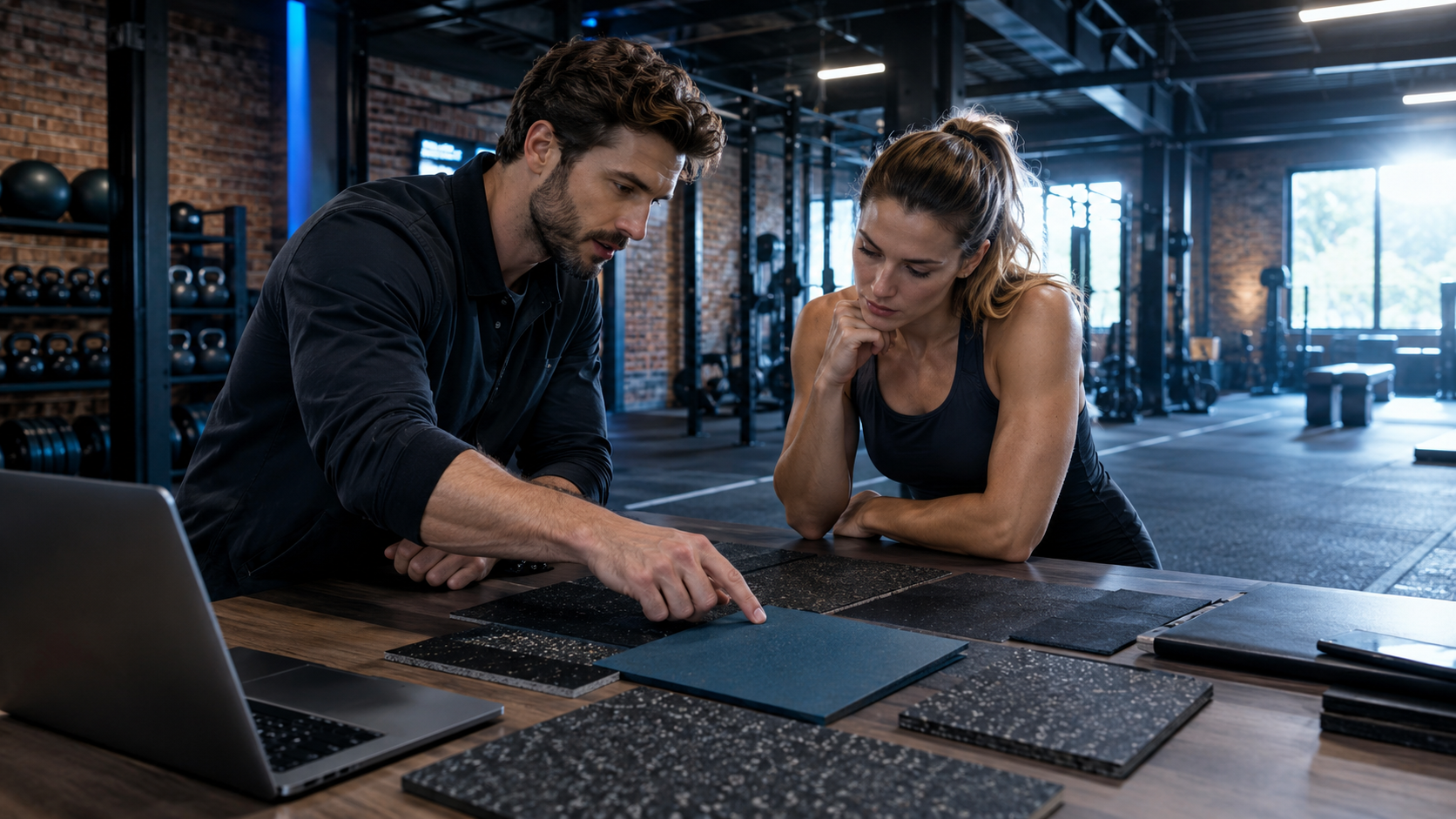
Buyers now choose flooring based on specific activities rather than a single thickness. An 8 mm layer works well for general fitness and cardio zones, while 10 mm offers reliable support under treadmills and lighter weights.
For heavier training, more substantial protection is essential. A 20 mm thickness typically provides the necessary foundation for home gyms and PT studios, while 40 mm is better suited for commercial spaces experiencing constant heavy use.
This shift creates an opportunity to map every zone in your facility to the correct depth before you buy.
Trend 2: Impact absorption matters more than raw thickness
Dropped dumbbells and loaded barbells generate high forces that thin or low-density mats cannot handle. Proper gym floor impact absorption protects both your joints and the floor beneath.
We guide clients to pair thickness with density so that weightlifting mat thickness truly matches the loads involved. Overbuying thick flooring for light training wastes money, while underbuying in lifting areas risks injury and repairs.
Explore our range organised by use to see how different depths perform under real training conditions.
Trend 3: Noise control drives home-gym decisions
Residents in London, Manchester, and other UK cities are increasingly seeking flooring solutions that effectively reduce vibration and impact noise for their neighbours. Fortunately, thicker rubber layers, especially when combined with the correct underlay, can deliver measurable sound reduction. This presents a clear opportunity for both installers and gym owners to specify the appropriate depth from the outset. By choosing gym floor thickness with noise control in mind, you can proactively avoid complaints and the need for costly retrofits later on.
Trend 4: Commercial operators match thickness to traffic and equipment
Facilities experiencing high footfall and frequent heavy lifts demand 20 mm to 40 mm options capable of withstanding daily punishment. Crucially, flooring for squats and Olympic lifts requires extra depth to protect both the equipment and the building structure itself. We often work with commercial clients to accurately specify zones, ensuring optimal gym floor depth across every area without the unnecessary expense of uniform thick layers.
View our project examples to see how thickness choices perform in real commercial settings.
Key takeaways for your next flooring decision
When making your next flooring decision, start by listing the specific exercises and equipment intended for each zone in your facility. From there, select a thickness that genuinely matches the highest impact expected, rather than simply defaulting to the thickest option available. It's also worth remembering that virgin rubber remains the preferred material; its ability to maintain density and performance over years of use truly protects your investment and keeps training environments consistently safe.
Ready to choose with confidence?
We combine expert guidance with transparent pricing so you can select the right gym flooring thickness for your space. Talk to a Flooring Expert today and receive tailored recommendations that deliver lasting performance.
The Gym Flooring Hub