
Gym Flooring Noise Reduction: The Silent Power of Premium Rubber Floors
One deadlift dropped at 6am can wake an entire block of flats. Home gym owners, personal trainers, and commercial gym teams all know that heavy thud, and so do the people living next door.
Reducing gym flooring noise is often overlooked until the complaints start rolling in. This playbook will walk you through how gym noise travels, which floor build-up suits each activity, and how to create a space that stays quiet, protects your kit, and keeps your mind on the workout.
Why Gym Noise Travels Further Than You Think
Gym noise typically comes in two main forms. Airborne noise includes the clang of weights, music, and vocal grunts. Impact noise is the heavy thud of a dropped weight or footfall, which travels through the building’s slab and walls.
Thin, cheap mats might soften the clang, but they rarely stop the thud. That’s why a garage gym can sound like a drum to the house next door. Even quiet gym mats can only reduce impact so much, meaning your floor needs to be suited to its specific job.
UK acoustic consultancy Cass Allen explains this well in its 2022 guidance on gyms in mixed-use developments. It highlights dropped weights as a major source of neighbour complaints. Depending on the activity, it also recommends resilient matting, thicker systems, or sprung floors, with very low night-time noise targets for neighbouring homes.
The good news is that you can plan for this. When you match your floor to your noise source, you turn a common problem into a real advantage for your gym.
How Virgin Rubber Helps to Reduce Gym Noise
Our rubber flooring uses virgin rubber with no recycled fillers . This gives you a dense, consistent material that absorbs impact energy instead of bouncing it back into the room. As an approved UK distributor of Pavigym, we also supply performance-engineered flooring built for demanding training spaces.
We want to be straight with you, though. The material type alone doesn’t decide how quiet a floor is. Thickness, density, bonding, underlay, and the subfloor beneath all play a part. Independent supplier testing published in 2026 by Light In Fitness suggests a full build-up with acoustic underlay can outperform a rubber tile on its own. Treat those figures as a helpful guide, not a promise for every floor.
Our customers certainly notice the difference. One told us: "The quality is outstanding - dense, solid, and absorbs noise brilliantly... My garage gym finally feels professional."
Your Step-by-Step Playbook for Gym Flooring Noise Reduction
Follow these six steps to build a floor that keeps sound under control.
- Identify your noise source. Free weights create short, sharp impacts, while treadmills and rowers create constant vibration. Write down which one matters most in your space.
- Match thickness to the activity. Light training and yoga need less depth. Deadlifts, kettlebells, and Olympic lifts need thick, dense rubber. Avoid thin, budget mats in any area where weights drop.
- Add an acoustic layer where needed. A resilient underlay beneath your rubber adds another barrier against impact. This is most important in flats, upstairs rooms, and shared buildings.
- Isolate your machines. Place cardio equipment on its own dense rubber area. This stops vibration from running into walls and floors.
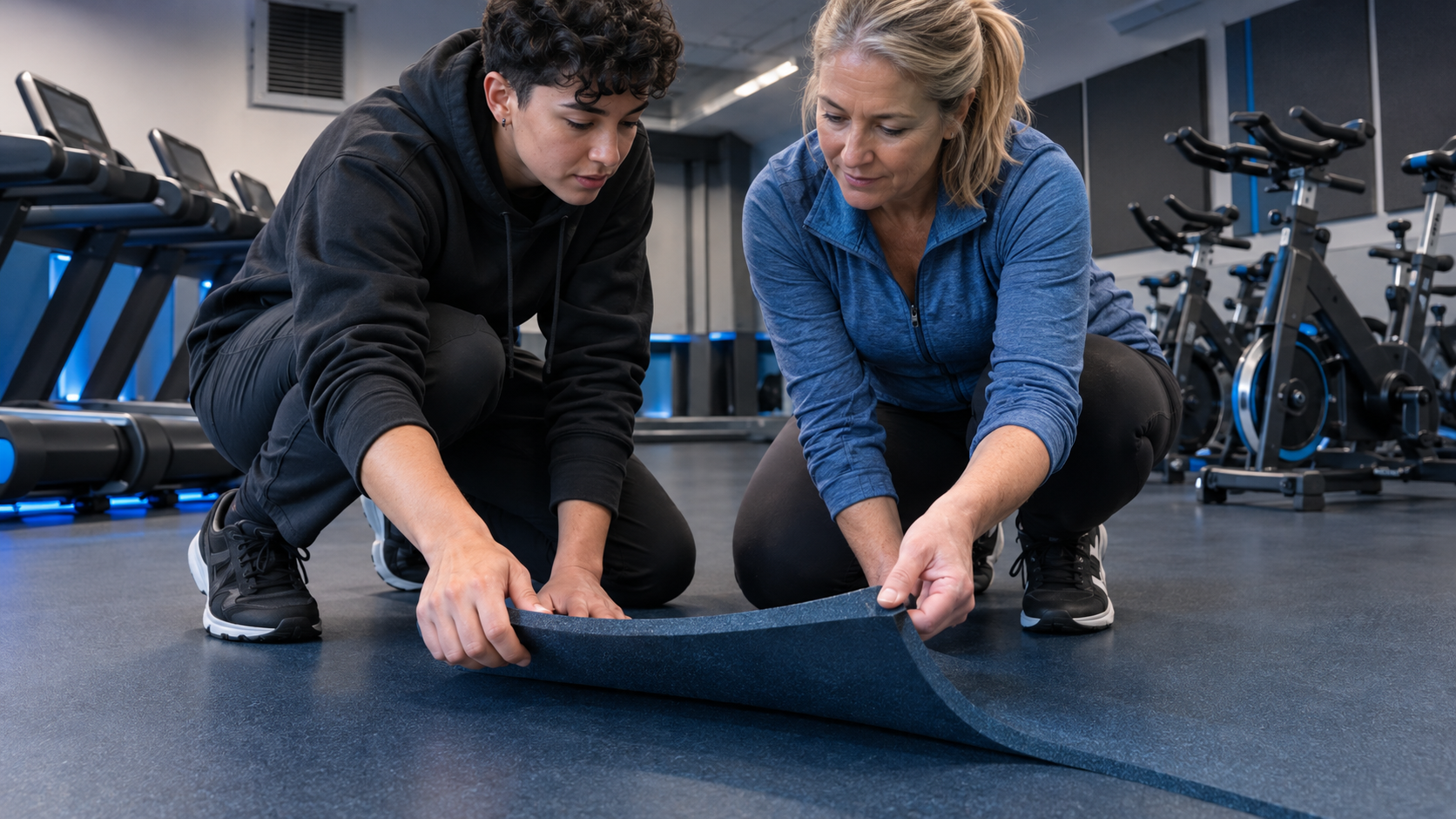
- Check the subfloor and fit. A level, clean base helps tiles sit tight with no rattling or gaps. Good installation protects both sound control and safety.
- Test, then fine-tune. Drop a light weight, ask a neighbour or family member how it sounds, then add thickness or underlay if you need more control.
If you are setting up at home, our home gym flooring range is a great place to start. For studios, PT spaces, and larger facilities, you can browse gym flooring by use to find the right build-up for each zone.
A Typical Example: The Garage Gym That Went Quiet
Here is a typical example from the projects we support. A home lifter in Leeds trains in an integrated garage that shares a wall with a neighbouring terrace. Thin foam tiles left every dropped bar echoing through the brick.
The fix was a thick virgin rubber floor in the lifting area, with a separate dense rubber base under the rower. The thud shrank to a dull sound, the neighbour stopped knocking, and the lifter could train early without worrying. That’s the kind of sound-dampening effect a well-chosen build-up can deliver.
What You Gain From a Quieter Floor
Noise control does more than just keep the peace; it improves almost every part of your training experience.
- Better focus: A calmer room lets you concentrate on your form and your next set.
- Happier neighbours: Fewer thuds mean fewer complaints, which protects your relationships and your training hours.
- Longer equipment life: Shock-absorbing rubber cushions your barbells, plates, and machines from repeated impact.
- Protected subfloors: Dense rubber spreads the load, which helps shield concrete, screed, and timber from damage.
- A more professional feel: Members, clients, and family notice a space that looks and sounds well planned.
Planning a Commercial Space?
UK building rules do not set one clear acoustic standard for gyms. Many teams use BS 8233 and a project noise assessment as best practice instead. If your gym sits below or beside flats, for example in a busy city centre like Manchester or Birmingham, we recommend booking a qualified acoustic assessment early.
Then use that advice to choose your flooring. You can explore real flooring solutions in our store and see how different products suit different zones.
Key Takeaways
- Impact noise, not just sound in the air, causes most neighbour complaints.
- Thin, cheap mats rarely give enough acoustic protection for weights.
- Thick, dense virgin rubber is a strong foundation for reducing gym noise.
- Underlay, machine isolation, and a level subfloor can take your results further.
- No floor offers perfect soundproofing, but the right system makes a big difference.
Ready to Make Your Gym Silent but Strong?
Your training space should feel safe, comfortable, and confident every time you step onto it. With the right advice, you can build a floor that protects your neighbours, your equipment, and your focus, whether you train at home or run a busy facility. When you are ready to plan your acoustic-enhancing setup, our team can help you Talk to a Flooring Expert.
The Gym Flooring Hub